24.
09.
2026.
Department
DOP
DOP
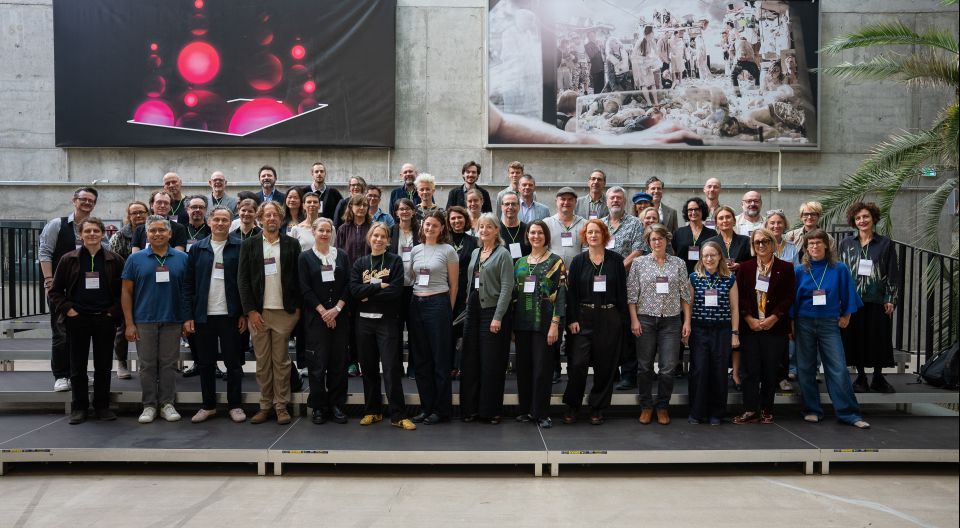
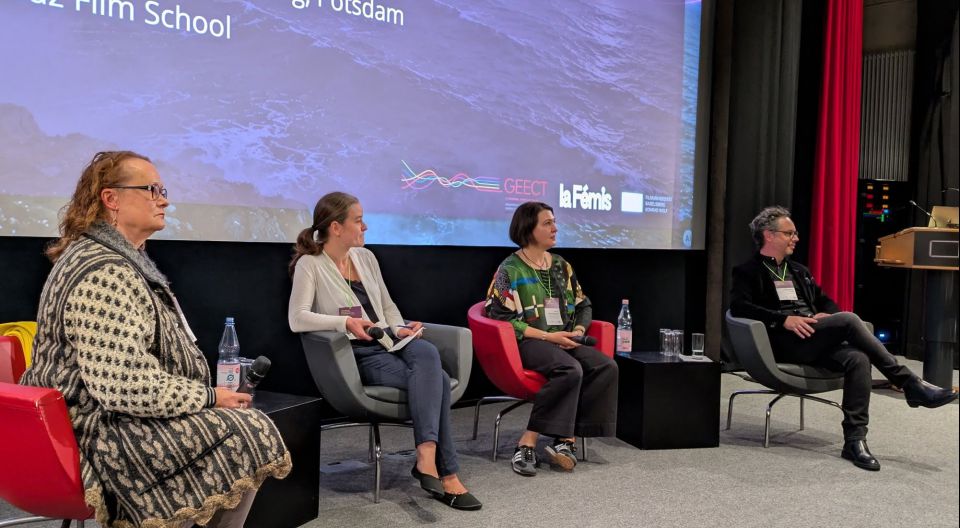
Filip Pudło, our PhD from Photography Course, took part in the GEECT Conference which took place from 17th till 18th September at the Film University Babelsberg in Germany.
The main theme of the conference was research in film schools in turbulent times and our lecturer, Filip Gabriel Pudlo, gave a presentation titled: "Beyond Production: Film School as a Research Environment for Generative and RealTime Audiovisual Practices".
This presentation reflects on the role of film schools as environments for artistic and technological experimentation in periods of rapid media transformation. Drawing on the historical example of the Łódź Film School and the activities of the Workshop of the Film Form in the 1970s, it examines how educational institutions can create conditions for emerging audiovisual practices that do not yet fit established production models. The Workshop of the Film Form responded to a changing media landscape by treating film, photography, sound and transmission technologies not merely as tools of production, but as subjects of artistic and research inquiry.
The presentation argues that contemporary developments in generative systems, artificial intelligence, motion capture, virtual production and real-time environments create a comparable moment of transformation. Beyond their technical applications, these media can also be understood as dramaturgical medium, shaping the structure, temporality and performative logic of audiovisual works. These practices challenge traditional distinctions between production, performance, computation and artistic research, while opening new possibilities for experimentation.
Using examples from current initiatives at the Łódź Film School, including the establishment of The Centre for Interdisciplinary Research and an international Erasmus+ project focused on motion capture and real-time performance, the presentation discusses how film schools can support emerging forms of practice through research infrastructures, interdisciplinary collaboration and international networks. Particular attention is given to the role of film schools as places where new technologies can be tested through artistic practice. Unlike many technologically oriented institutions, film schools provide access to creative communities capable of critically exploring the aesthetic and cultural implications of technological change.
Rather than presenting generative and real-time technologies as ends 6 in themselves, the presentation considers how institutions can create environments in which new audiovisual practices emerge, evolve and become subjects of artistic research.
photo: Nick Hempel, IKF, Filmuniversity Babelsberg KONRAD WOLF
This presentation reflects on the role of film schools as environments for artistic and technological experimentation in periods of rapid media transformation. Drawing on the historical example of the Łódź Film School and the activities of the Workshop of the Film Form in the 1970s, it examines how educational institutions can create conditions for emerging audiovisual practices that do not yet fit established production models. The Workshop of the Film Form responded to a changing media landscape by treating film, photography, sound and transmission technologies not merely as tools of production, but as subjects of artistic and research inquiry.
The presentation argues that contemporary developments in generative systems, artificial intelligence, motion capture, virtual production and real-time environments create a comparable moment of transformation. Beyond their technical applications, these media can also be understood as dramaturgical medium, shaping the structure, temporality and performative logic of audiovisual works. These practices challenge traditional distinctions between production, performance, computation and artistic research, while opening new possibilities for experimentation.
Using examples from current initiatives at the Łódź Film School, including the establishment of The Centre for Interdisciplinary Research and an international Erasmus+ project focused on motion capture and real-time performance, the presentation discusses how film schools can support emerging forms of practice through research infrastructures, interdisciplinary collaboration and international networks. Particular attention is given to the role of film schools as places where new technologies can be tested through artistic practice. Unlike many technologically oriented institutions, film schools provide access to creative communities capable of critically exploring the aesthetic and cultural implications of technological change.
Rather than presenting generative and real-time technologies as ends 6 in themselves, the presentation considers how institutions can create environments in which new audiovisual practices emerge, evolve and become subjects of artistic research.
photo: Nick Hempel, IKF, Filmuniversity Babelsberg KONRAD WOLF