29.
05.
2026.
Department
Acting
Acting
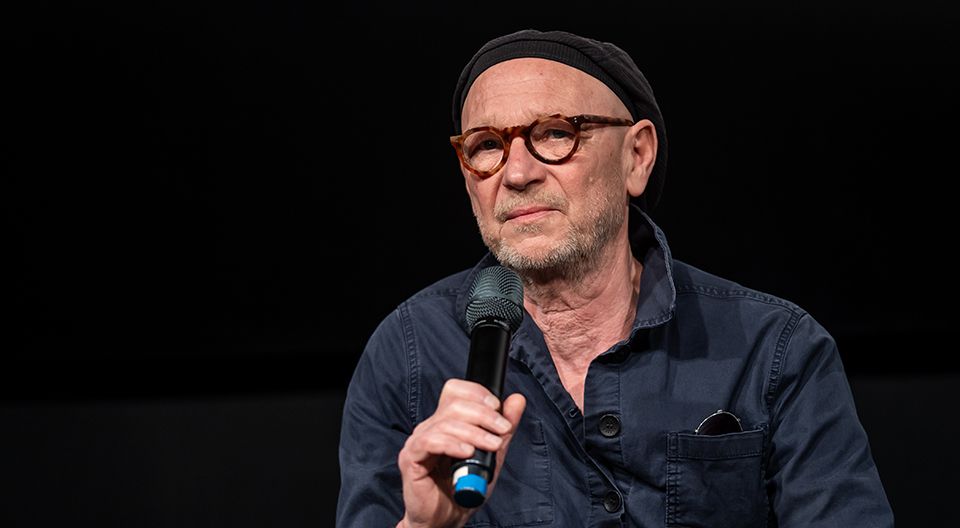
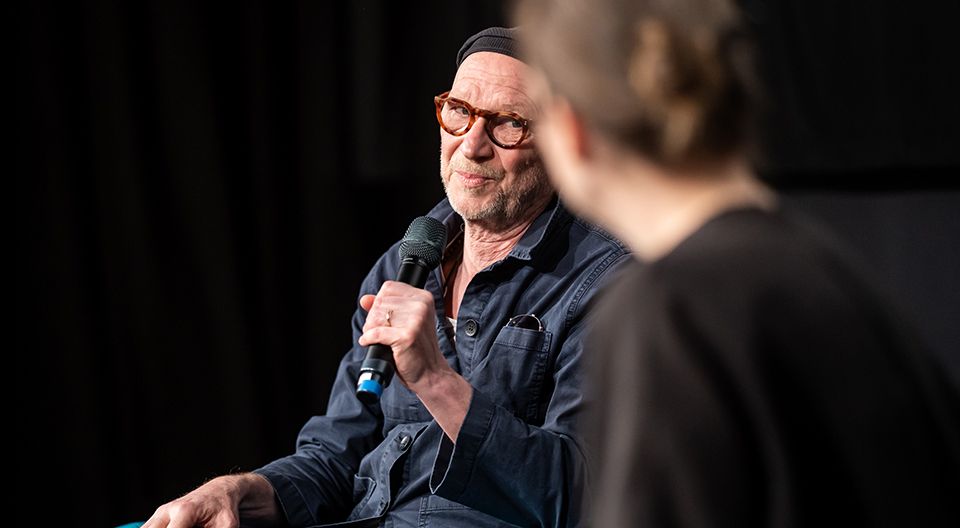
Silence. Slow down. Theatre continues. A distinguished director of European theatre and master of unconventional acting methods met with the Lodz Film School community.
During his first days in Łódź, Luk Perceval led workshops for twelve acting students from the second, third, and fourth years, during which he presented his creative work methods.
Each day began with an hour-long yoga session led by Luk himself. He then suggested team games like badminton or throwing a ball, which, according to the director, allowed for complete focus and thus released energy. The diet was rich in raw vegetables and fruits.
These are unusual tools in an actor's methodological toolbox – that's why unconventionality breeds true energy. And connecting "with oneself" is the foundation of an actor's work – slowly, without unnecessary rush; rejecting the ideal of perfection that dictates the pursuit of a goal. It's the process and the exploration of one's own potential that are crucial.
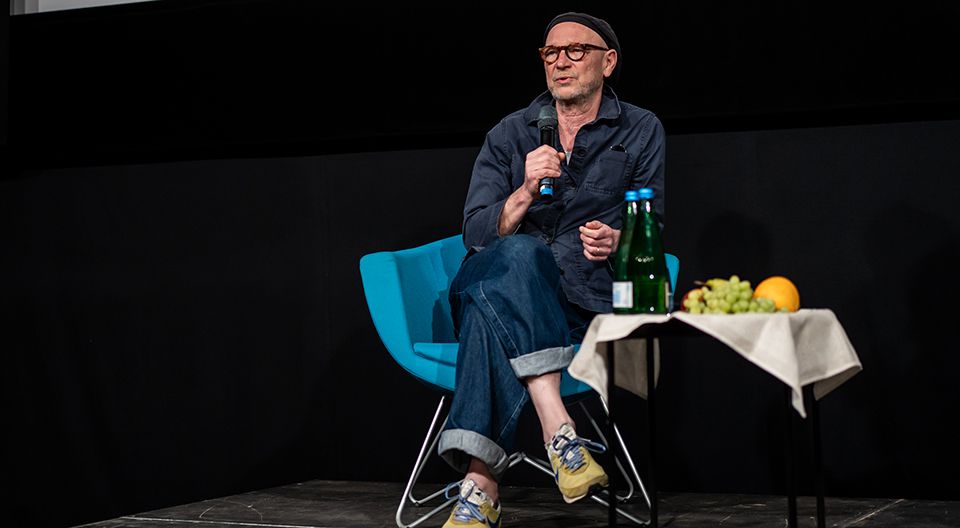
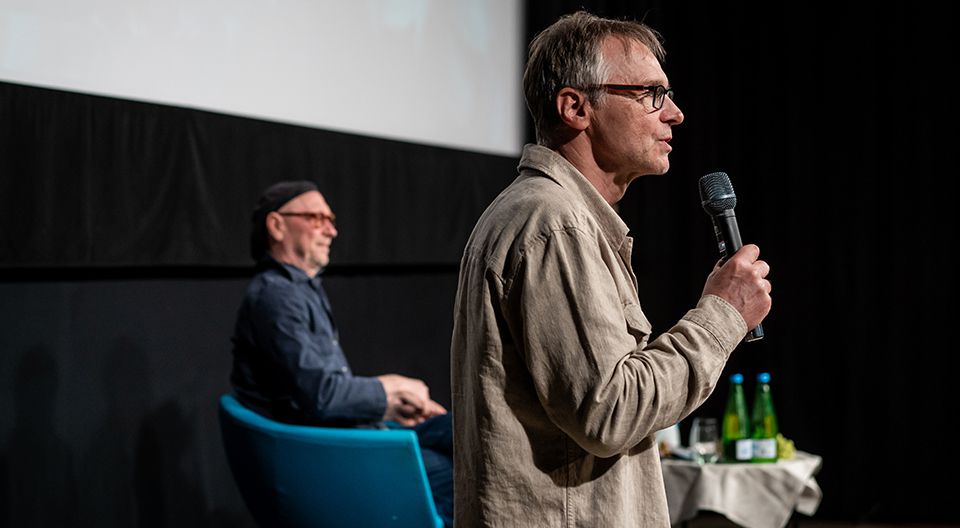
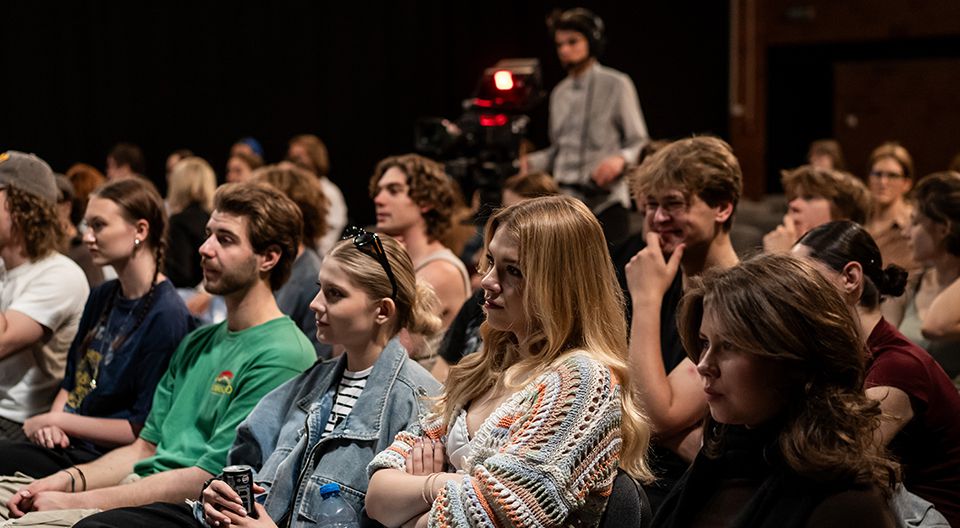
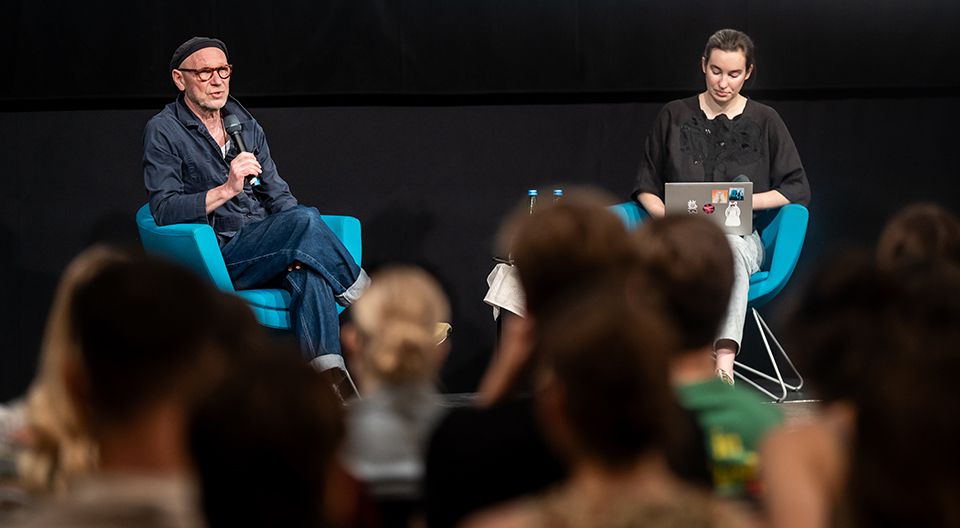
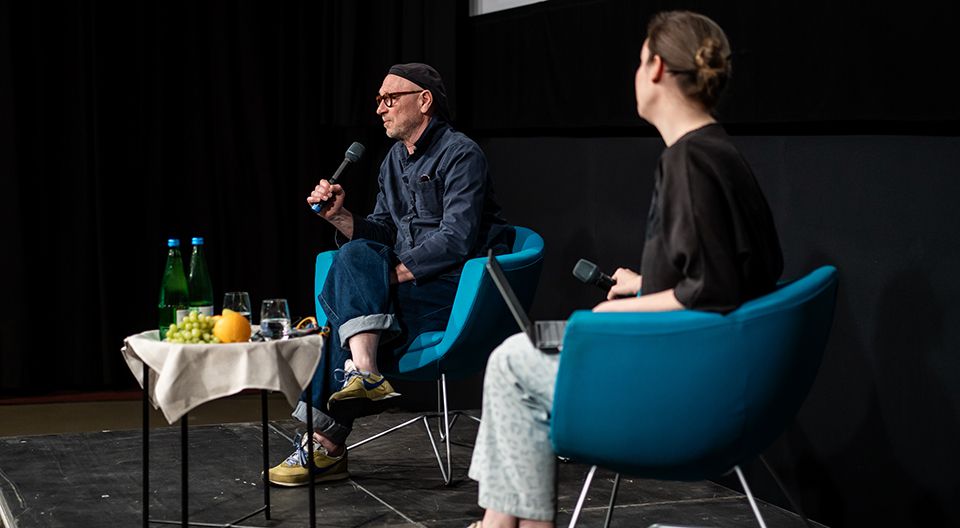
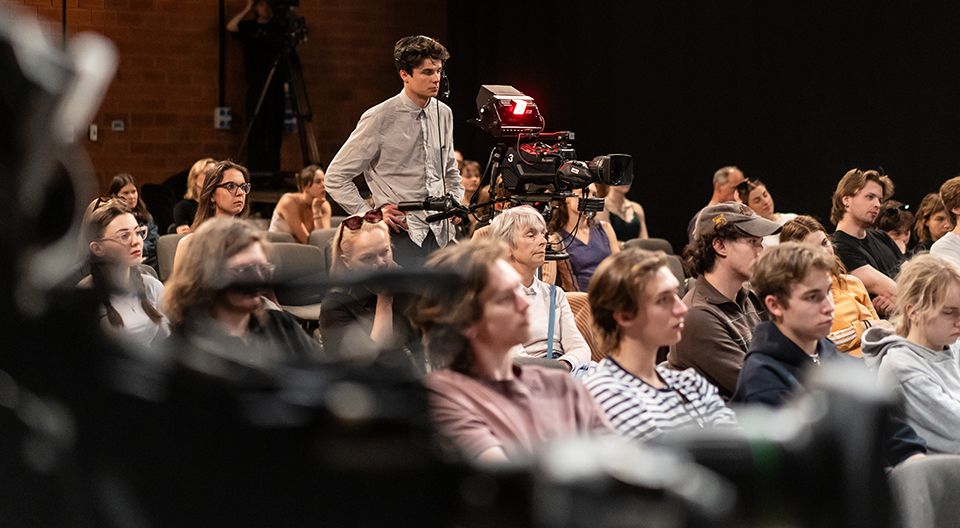
At a meeting with the school community, held on May 28th in the Film Studio and led by Maja Wisła-Szopińska, he spoke about the beginnings of his teaching career. However, it quickly led to burnout. This experience prompted Luk to ask fundamental questions such as "What is the point of acting?"
- Years later, I remembered this phrase of an old theater teacher of mine, who always said: "Well, it's just writing in the sand, you know? You don't have to make it more important than it is". And that's also what I am explaining in that text that became for me more and more, how shall I say, significant. Because then I started my own company; I started to experience rehearsing methods, I got a burnout, became sick, went actually through the, I'd say, the storm of the theater, and yeah, started to think about the sense of it. Why are we attracted to real human beings - watching real human beings? And I think there is, and that's what I try to explain in this text. It's a text you can read on my website because it was then later used when I was also leading a theater school. It was kind of a credo of the theater school. I think there is in in arts generally, that's what this text is trying to express, and we are creating a space which is for me a spiritual space. In the sense that we are through arts, whether it's poetry or literature or theater or whatever art form, expressing our not knowing, our doubts about life. The fact that we don't know why we are here. We don't know, and this not knowing can lead to, let's say, despair, can lead to humour - can lead to tragedy - can lead to absurdity.
Luk shared his childhood memories of growing up in poverty, which allowed him to discover theatre, a space of solidarity and spirituality.
- When I was 16, I saw a performance, „Death of a Salesman”, at the National Theater in Antwerp that actually was about my situation at home. My father was unemployed, angry and everything. And that touched me deep. And there for the first time, I actually understood what theater is. It's actually a kind of space where you are solidary in your pain. Yeah. And I think these moments were actually decisive for why I wanted to be there in theater. Why I wanted to because what for me was beautiful was not, let's say, a space where you had to be the fittest, like in football, the strongest or the loudest or the most aggressive. It was a space where you could be weak and share your losses and your doubts.
The host asked how to expose one's doubts on stage, where to draw from—and then untamedly unleash the energy hidden within. Maja referred to workshops he conducted with students of the Acting Department.
- This hour in the morning is for me so crucial. It's not a question of technique, it's a question of psychological and emotional hygiene. You just learn to breathe, to let go of the tensions in the body, and to accept the state you happen to be in today. Sometimes you come to a rehearsal with a head full of private problems, you're tense, you're stressed. If you immediately throw yourself into the text and into action, you will only be playing a role, you will be a craftsman, not an artist. You will use your old, proven tricks to hide what you really feel. And in theater, the most interesting thing is precisely what is underneath – this truth and this vulnerability.
These are unconventional pieces of advice, rarely heard in artistic contexts. Recommendations? A constant pursuit of connection with oneself, an ongoing process, necessary not only on stage.
What will remain in students' hearts after meeting such an unconventional director?
- It's about getting in contact with yourself before you get in contact with someone else. Because theater after all is a relation, it's an encounter with another human being. If you're not okay with yourself, if you don't know what's happening inside you, how can you authentically meet your partner on stage?
Thank you for the extraordinary meeting!
photos: Mikołaj Zacharow
edited by Małgorzata Lisiecka-Muniak
Each day began with an hour-long yoga session led by Luk himself. He then suggested team games like badminton or throwing a ball, which, according to the director, allowed for complete focus and thus released energy. The diet was rich in raw vegetables and fruits.
These are unusual tools in an actor's methodological toolbox – that's why unconventionality breeds true energy. And connecting "with oneself" is the foundation of an actor's work – slowly, without unnecessary rush; rejecting the ideal of perfection that dictates the pursuit of a goal. It's the process and the exploration of one's own potential that are crucial.
At a meeting with the school community, held on May 28th in the Film Studio and led by Maja Wisła-Szopińska, he spoke about the beginnings of his teaching career. However, it quickly led to burnout. This experience prompted Luk to ask fundamental questions such as "What is the point of acting?"
- Years later, I remembered this phrase of an old theater teacher of mine, who always said: "Well, it's just writing in the sand, you know? You don't have to make it more important than it is". And that's also what I am explaining in that text that became for me more and more, how shall I say, significant. Because then I started my own company; I started to experience rehearsing methods, I got a burnout, became sick, went actually through the, I'd say, the storm of the theater, and yeah, started to think about the sense of it. Why are we attracted to real human beings - watching real human beings? And I think there is, and that's what I try to explain in this text. It's a text you can read on my website because it was then later used when I was also leading a theater school. It was kind of a credo of the theater school. I think there is in in arts generally, that's what this text is trying to express, and we are creating a space which is for me a spiritual space. In the sense that we are through arts, whether it's poetry or literature or theater or whatever art form, expressing our not knowing, our doubts about life. The fact that we don't know why we are here. We don't know, and this not knowing can lead to, let's say, despair, can lead to humour - can lead to tragedy - can lead to absurdity.
Luk shared his childhood memories of growing up in poverty, which allowed him to discover theatre, a space of solidarity and spirituality.
- When I was 16, I saw a performance, „Death of a Salesman”, at the National Theater in Antwerp that actually was about my situation at home. My father was unemployed, angry and everything. And that touched me deep. And there for the first time, I actually understood what theater is. It's actually a kind of space where you are solidary in your pain. Yeah. And I think these moments were actually decisive for why I wanted to be there in theater. Why I wanted to because what for me was beautiful was not, let's say, a space where you had to be the fittest, like in football, the strongest or the loudest or the most aggressive. It was a space where you could be weak and share your losses and your doubts.
The host asked how to expose one's doubts on stage, where to draw from—and then untamedly unleash the energy hidden within. Maja referred to workshops he conducted with students of the Acting Department.
- This hour in the morning is for me so crucial. It's not a question of technique, it's a question of psychological and emotional hygiene. You just learn to breathe, to let go of the tensions in the body, and to accept the state you happen to be in today. Sometimes you come to a rehearsal with a head full of private problems, you're tense, you're stressed. If you immediately throw yourself into the text and into action, you will only be playing a role, you will be a craftsman, not an artist. You will use your old, proven tricks to hide what you really feel. And in theater, the most interesting thing is precisely what is underneath – this truth and this vulnerability.
These are unconventional pieces of advice, rarely heard in artistic contexts. Recommendations? A constant pursuit of connection with oneself, an ongoing process, necessary not only on stage.
What will remain in students' hearts after meeting such an unconventional director?
- It's about getting in contact with yourself before you get in contact with someone else. Because theater after all is a relation, it's an encounter with another human being. If you're not okay with yourself, if you don't know what's happening inside you, how can you authentically meet your partner on stage?
Thank you for the extraordinary meeting!
photos: Mikołaj Zacharow
edited by Małgorzata Lisiecka-Muniak