19.
02.
2026.
Department
Acting
Acting
The graduation show of the students of the Acting Department, directed by Ewa Galica, will premiere on 6, March.
The show has been based on Euripides' "Iphigenia in Aulis" (translated by Robert R. Chodkowski), "Iphigenia in Aulis" (translated by Jan Kasprowicz), "Electra" by Euripides (translated by Jan Kasprowicz) as well as original texts.
Direction: Ewa Galica
Dramaturgy: Michał Pabian
Choreography: Tomasz Graczyk
Art direction and costumes: Wiktoria Kubat
Lighting Direction: Damian Pawella
Music: Marcin Powalski
Choir preparation: Elina Toneva & Tomasz Rodowicz
Assistants to the director: Kamila Tytło, Alicja Wieniawa-Narkiewicz, Marcin Mazurek
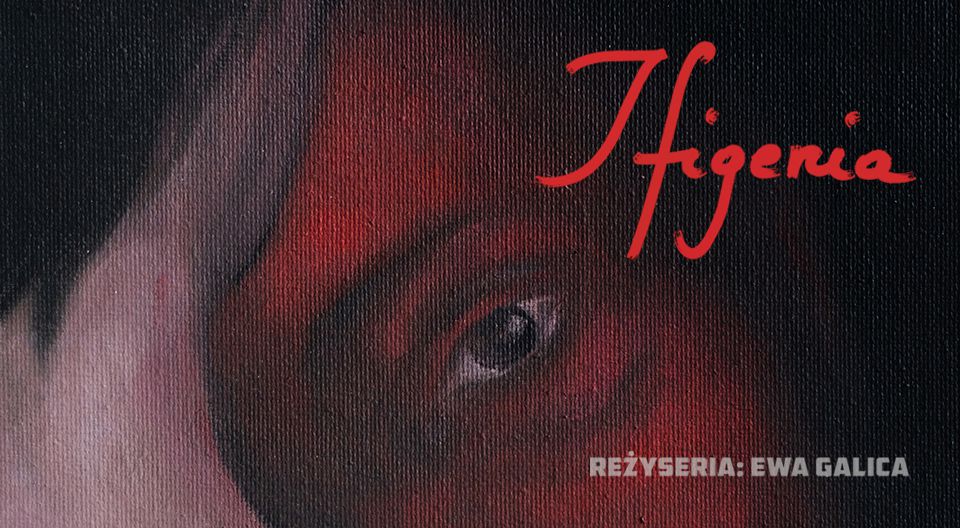
Poster: Zuzanna Szor
Cast:
Helena Grabicka - Iphigenia
Mikołaj Janas - Achilles
Bartłomiej Kotwica - Agamemnon
Antoni Kowarski - Menelaus
Jędrzej Matwijów - Pylades
Marcin Mazurek - Orestes
Adrian Pietruszewski - Kola
Kinga Stachowiak - Electra
Kamila Tytło - Tetyda
Alicja Wieniawa-Narkiewicz - Łania
Milena Zając - Clytemnestra
"Iphigenia" is a play about a world frozen in stillness—the moment before a decision that will change everything. The characters exist in a constant state of suspension between stillness and anticipation, silence and impending catastrophe underscored by an atmosphere of windless stagnation and mounting tension. The narrative weaves classic motifs of conflict between duty and love, fate and free will, sacrifice and power with elements of absurdity and magical realism. We want to encourage audiences to reflect on the contemporary experience of tragedy: not as a grand, heroic event, but as a process unfolding in interpersonal relationships, in language, in memory, and in our bodies. Our encounter with antiquity resembles more a study of the morphology of existence than an attempt at "explanation." We are not interested in explaining the myth of Iphigenia, but in inducing myth to help explain our lives, which only ends in us wading into an even greater infinity of mysteries. We doubt... What is the difference between the heroic body and the physiological body? Do the Lords of this world prefer an expression "to sacrifice" or "bloody murder"? Do curses really exist? Or are they merely minor scratches inflicted on us by others, which we pass on. And these, repeated and repeated, become both an open wound and a murder weapon.
The play's central dramatic axis is the decision of Agamemnon, commander of the Achaean army, concerning the sacrifice of his daughter. If he agrees, the wind will return, and the troops, previously held in Aulis harbour, will finally set out to capture Troy. Killing one's daughter to start a war and continue killing—who would doubt it? And yet, all good things come from birds; will a world not governed by the logic of sacrifice and not subject to the need for constant momentum ever be possible? Here, poetry intertwines with everyday life, and intimacy with public debate. Silence, the recurring motif of birds, water, and a windless atmosphere of expectation become a metaphor for a world where decisions mature slowly, but their consequences are irreversible. The characters, while simultaneously playing their roles, attempt to liberate themselves from them, negotiating the boundaries between fate and will. In this play, there are neither evil nor good characters; only people. The stage language, in addition to words, relies on movement, choreography, quasi-ritual fragments, and everyday scenes that contrast with the pathos of the ancient text.
" The absurdity was born from the comparison of human needs with the unreasonable silence of the world. " Albert Camus
Premiere: 6, March 2026, Studyjny Theatre in Łódź
Direction: Ewa Galica
Dramaturgy: Michał Pabian
Choreography: Tomasz Graczyk
Art direction and costumes: Wiktoria Kubat
Lighting Direction: Damian Pawella
Music: Marcin Powalski
Choir preparation: Elina Toneva & Tomasz Rodowicz
Assistants to the director: Kamila Tytło, Alicja Wieniawa-Narkiewicz, Marcin Mazurek
Poster: Zuzanna Szor
Cast:
Helena Grabicka - Iphigenia
Mikołaj Janas - Achilles
Bartłomiej Kotwica - Agamemnon
Antoni Kowarski - Menelaus
Jędrzej Matwijów - Pylades
Marcin Mazurek - Orestes
Adrian Pietruszewski - Kola
Kinga Stachowiak - Electra
Kamila Tytło - Tetyda
Alicja Wieniawa-Narkiewicz - Łania
Milena Zając - Clytemnestra
"Iphigenia" is a play about a world frozen in stillness—the moment before a decision that will change everything. The characters exist in a constant state of suspension between stillness and anticipation, silence and impending catastrophe underscored by an atmosphere of windless stagnation and mounting tension. The narrative weaves classic motifs of conflict between duty and love, fate and free will, sacrifice and power with elements of absurdity and magical realism. We want to encourage audiences to reflect on the contemporary experience of tragedy: not as a grand, heroic event, but as a process unfolding in interpersonal relationships, in language, in memory, and in our bodies. Our encounter with antiquity resembles more a study of the morphology of existence than an attempt at "explanation." We are not interested in explaining the myth of Iphigenia, but in inducing myth to help explain our lives, which only ends in us wading into an even greater infinity of mysteries. We doubt... What is the difference between the heroic body and the physiological body? Do the Lords of this world prefer an expression "to sacrifice" or "bloody murder"? Do curses really exist? Or are they merely minor scratches inflicted on us by others, which we pass on. And these, repeated and repeated, become both an open wound and a murder weapon.
The play's central dramatic axis is the decision of Agamemnon, commander of the Achaean army, concerning the sacrifice of his daughter. If he agrees, the wind will return, and the troops, previously held in Aulis harbour, will finally set out to capture Troy. Killing one's daughter to start a war and continue killing—who would doubt it? And yet, all good things come from birds; will a world not governed by the logic of sacrifice and not subject to the need for constant momentum ever be possible? Here, poetry intertwines with everyday life, and intimacy with public debate. Silence, the recurring motif of birds, water, and a windless atmosphere of expectation become a metaphor for a world where decisions mature slowly, but their consequences are irreversible. The characters, while simultaneously playing their roles, attempt to liberate themselves from them, negotiating the boundaries between fate and will. In this play, there are neither evil nor good characters; only people. The stage language, in addition to words, relies on movement, choreography, quasi-ritual fragments, and everyday scenes that contrast with the pathos of the ancient text.
" The absurdity was born from the comparison of human needs with the unreasonable silence of the world. " Albert Camus
Premiere: 6, March 2026, Studyjny Theatre in Łódź